







Why Your Baby’s Skin Reacts to “Baby Products”
1. Newborn Skin Is Still Learning How to Protect Itself
A baby’s skin barrier — the layer responsible for retaining moisture and blocking irritants — is thinner, more porous, and still developing during the first year of life.
What this means in practice:
-
Moisture escapes faster
-
Irritants penetrate more easily
-
Fragrance molecules linger longer
-
The skin microbiome is easily disrupted
Studies in pediatric dermatology show that infant skin has higher transepidermal water loss (TEWL) than adult skin, making it far more reactive to topical products.
This is why newborns commonly experience:
-
Dry patches
-
Redness
-
Baby acne
-
Eczema flares
-
Contact dermatitis
None of this means something is “wrong” with your baby.
It means their skin is still learning how to be skin.
2. Why “Baby Products” Can Still Trigger Reactions
The term “baby-safe” is often a marketing category, not a medical one.
Many mass-market baby products still contain ingredients known to irritate sensitive infant skin.
Common culprits include:
-
Fragrance / Parfum
(often a blend of undisclosed chemicals; a leading trigger for infant contact dermatitis) -
Sulfates (SLS/SLES)
(strip natural oils, weaken skin barrier) -
Preservatives such as parabens or formaldehyde releasers
-
Propylene glycol (a common sensitiser)
-
Synthetic colours
According to pediatric guidance, fragrance is one of the most common causes of skin reactions in babies, even when labelled “natural” or “mild.”
In other words:
A product can be marketed for babies and still be biologically overwhelming for baby skin.
3. What a Skin Reaction Is Really Telling You
When your baby’s skin reacts, it isn’t rejecting care.
It’s communicating.
Here’s how to read the signs:
-
Immediate redness or stinging → likely irritation from fragrance or surfactants
-
Dry, flaky patches → barrier damage or over-cleansing
-
Persistent rashes or eczema flares → sensitisation + weakened skin barrier
-
Cradle cap worsening after products → disruption of scalp microbiome
Your baby’s skin isn’t “overreacting.”
It’s responding honestly — without filters.
4. What to Avoid in Newborn Skincare (Especially in the First 6 Months)
Dermatologists and pediatricians widely recommend keeping newborn skincare boringly simple.
Avoid or minimise:
-
Artificial fragrance (including essential oils in infancy)
-
Harsh foaming cleansers
-
Long ingredient lists
-
Products claiming “quick fixes”
-
Daily bathing with soap
-
“Herbal blends” with many botanicals
In early life, less is not just more — it’s protective.
5. What Actually Helps: Science Meets Tradition
Modern dermatology increasingly supports what traditional care systems always practiced:
gentle nourishment over aggressive treatment.
Evidence-backed choices include:
-
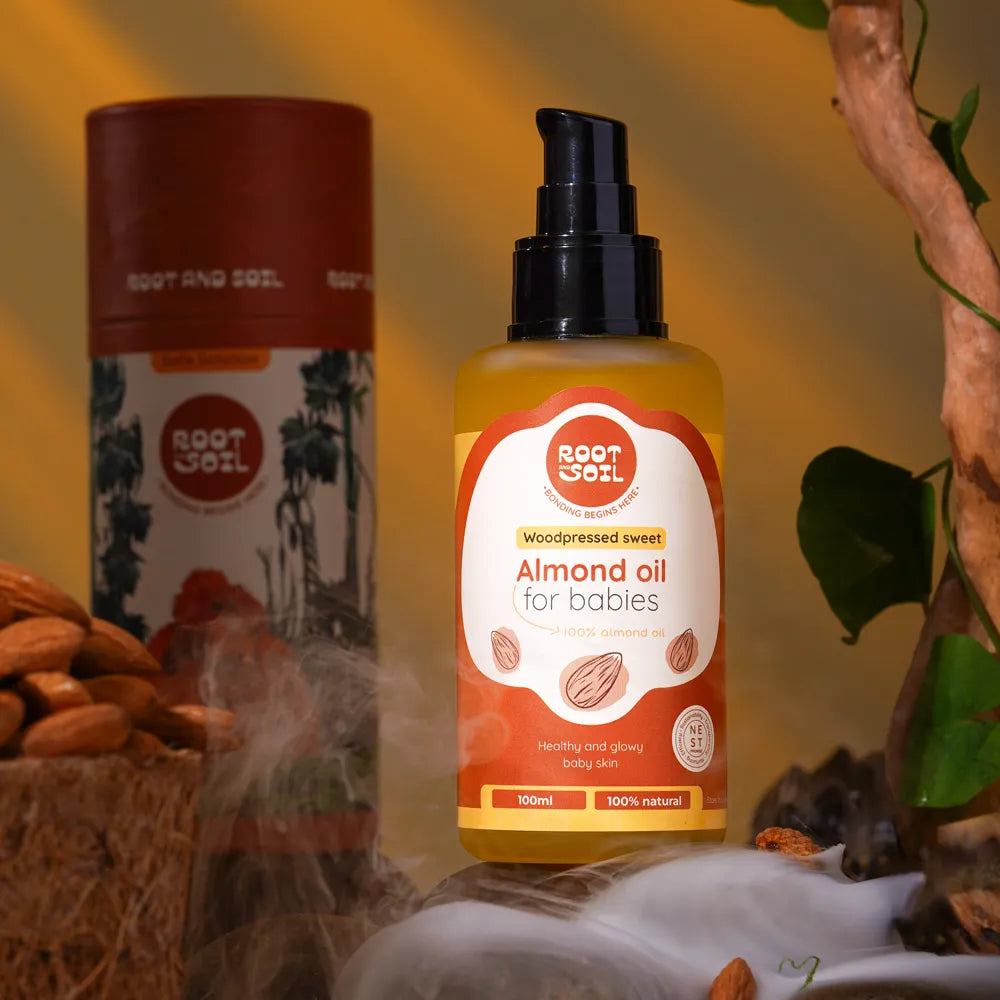
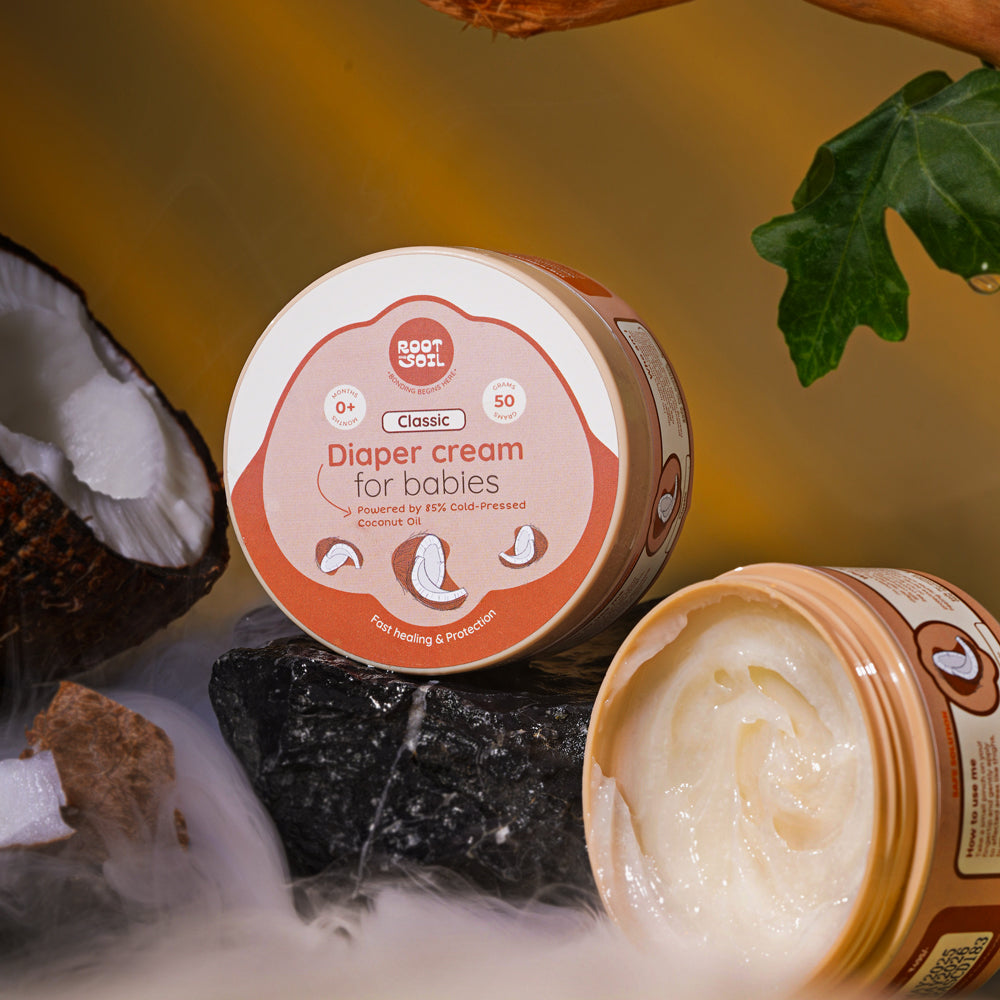
Cold-pressed edible oils (like virgin coconut oil or sweet almond oil)
Clinical studies show coconut oil performs as well as mineral oil for moisturizing infant skin, while offering additional antimicrobial benefits. -
Fragrance-free, minimal formulations
-
Fewer baths (2–3 times per week for newborns)
-
Moisturising immediately after bathing, while skin is still damp
These choices support:
-
Skin barrier repair
-
Microbiome balance
-
Reduced eczema risk
-
Long-term skin resilience
6. A Simple, Safe Newborn Skin Routine
If you’re unsure where to begin, start here:
Step 1: Bath (Short & Gentle)
-
Lukewarm water
-
Minimal cleanser (only where needed)
-
No scrubbing
Step 2: Nourish (Within 3 Minutes)
-
Apply a thin layer of cold-pressed oil or fragrance-free emollient
-
Massage gently — touch itself supports skin health
Step 3: Observe
-
If redness appears within 24–48 hours, pause the product
-
Simpler is always safer
7. The Root and Soil Philosophy (Brand Integration)
At Root and Soil, we begin where biology begins.
We don’t believe baby skin needs:
-
Strong scents
-
Complex chemistry
-
Over-correction
Our formulations are guided by one principle:
If it wouldn’t belong in the body, it doesn’t belong on the skin.
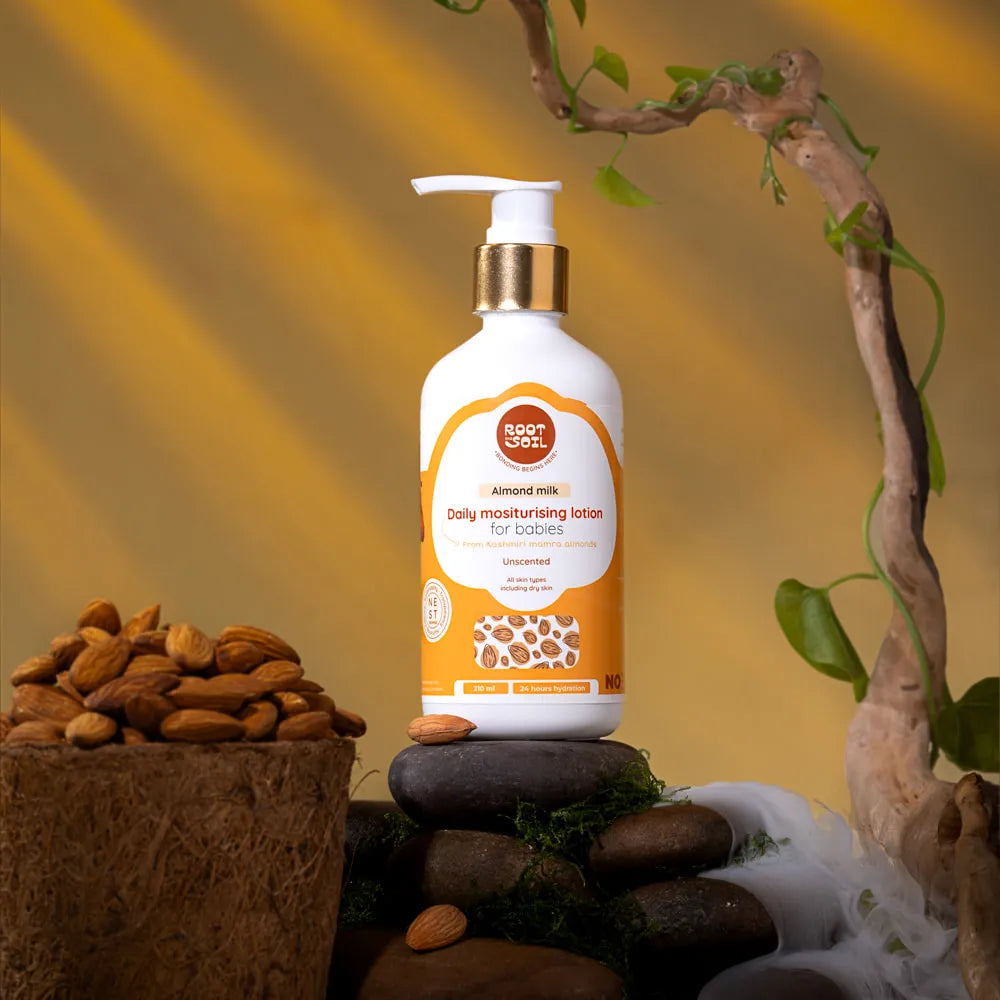
Cold-pressed oils.
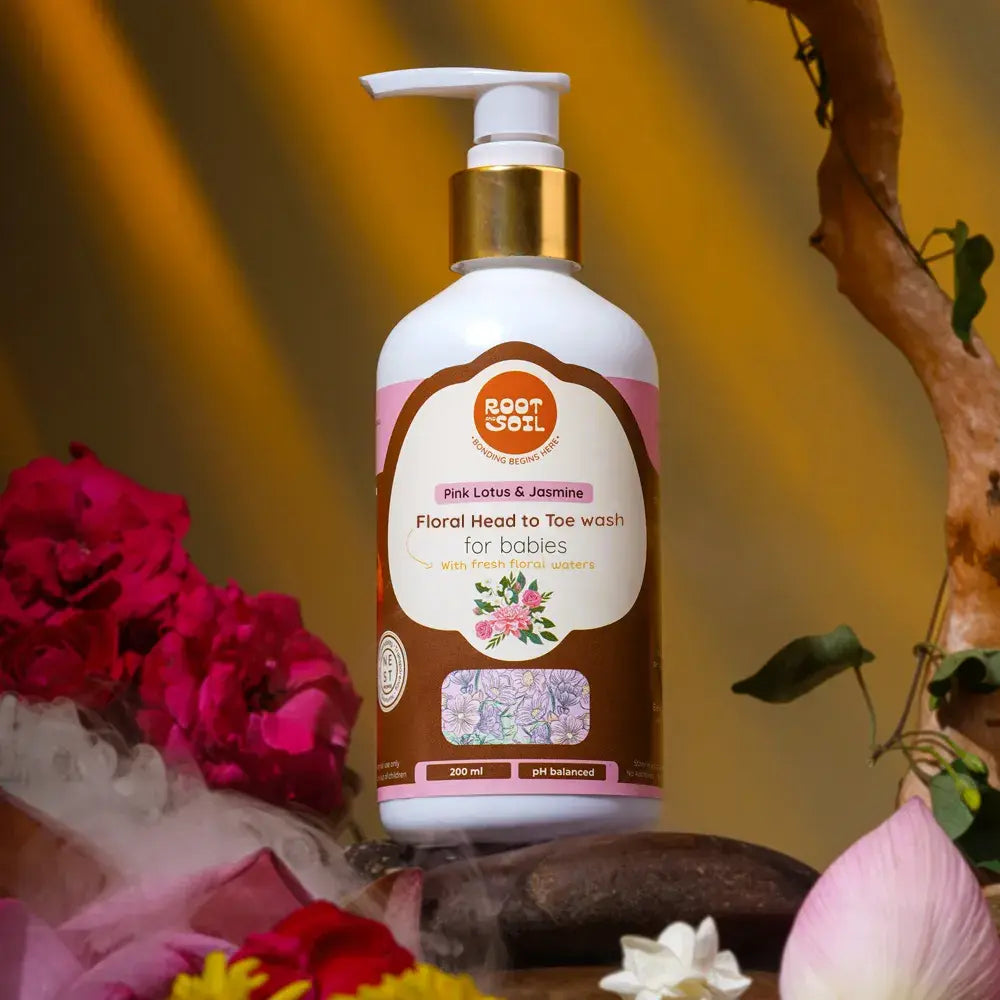
No artificial fragrance.
No unnecessary additives.
Small batches.
Skin-recognisable nourishment.
Because newborn care should feel familiar — not clinical.
Closing: Trust the Skin’s Wisdom
If your baby’s skin reacts, don’t panic.
And don’t blame yourself.
Skin reactions are not failures of care —
they are invitations to slow down.
To choose less.
To return to simplicity.
To let the skin do what it was always designed to do —
learn, strengthen, and protect.
FAQs
1. Why does my baby react to baby lotion?
Most reactions are caused by fragrance or preservatives irritating the immature skin barrier.
2. Is coconut oil safe for newborn skin?
Yes, cold-pressed virgin coconut oil has clinical evidence supporting its moisturising and antimicrobial benefits.
3. Should I stop all products if my baby gets a rash?
Pause new products, simplify care, and consult a pediatrician if irritation persists.
4. Are essential oils safe for babies?
Most experts advise avoiding essential oils in infancy due to irritation and respiratory risks.
5. How often should I bathe my newborn?
2–3 times per week is sufficient unless medically advised otherwise.
6. Can fragrance-free products still cause reactions?
Rarely, but always patch-test when introducing something new.
7. What’s the safest moisturiser for babies with eczema?
Fragrance-free emollients or dermatologist-approved oils.
8. Why does baby skin change so much in the first months?
Because the skin barrier and microbiome are still developing.
9. Is dry skin normal in newborns?
Yes — peeling and dryness are common and temporary.
10. When should I see a doctor for skin issues?
If rashes are persistent, oozing, spreading, or causing distress.
Understanding the Startle Reflex: Why Your Baby Wakes the Moment You Put Them Down?
Why Your Baby Smells Different Every Week
Related Posts

10 Baby Care Tips During Monsoon Season

Difference Between Cradle Cap, Dry Scalp, Patchy Scalp, and Dandruff in Babies.

5 Reasons Your Baby’s Skin Looks Dry & Dull

A newborn Guide for the First Few Months

How to choose baby Skincare products in India ?

The Old Man of the Forest Has Something to Teach Us About Raising a Child

The Story of Root and Soil








1 Comment
qrv0gb