






Difference Between Cradle Cap, Dry Scalp, Patchy Scalp, and Dandruff in Babies.
1. Dry Scalp
• Causes: A simple lack of moisture. It is triggered by environmental factors like dry winter air, low indoor humidity, bathing too frequently, or using harsh, scented soaps that strip away natural protective oils.
• Symptoms:
• Tiny, powdery, translucent white flakes that resemble dust.
• Skin that looks and feels rough, tight, or slightly pink.
• Flakes shed effortlessly into the hair and onto clothes.
• Often accompanied by dry patches on the baby's cheeks, arms, or legs.
Treatment:
• Reduce Baths: Limit hair washing to 2–3 times a week using lukewarm water.
• Switch Shampoos: Use only fragrance-free, hypoallergenic baby washes.
• Hydrate the Scalp: Apply a small amount of pediatric-approved baby scalp moisturizer or a few drops of pure coconut oil to the scalp immediately after bathing to lock in moisture.
• Humidify: Run a cool-mist humidifier in your baby's nursery to add moisture to the air.
2. Patchy Scalp
• Causes: This localized pattern is usually caused by baby eczema (atopic dermatitis), localized friction (such as rubbing the back of the head against a crib mattress), or a highly contagious fungal infection like ringworm.
Symptoms:
- Irritation, redness, or flaking confined to distinct, isolated islands of skin.
- The affected areas may look raw, scaly, or feature raised bumps.
- Noticeable, localized hair thinning or temporary bald spots within the patches.
- The baby may be very fussy, scratch at the specific spots, or rub their head against blankets.

- Friction Relief: Increase supervised tummy time during the day to relieve constant pressure and rubbing on the back of the head.
- Eczema Care: Apply a thick, fragrance-free emollient ointment to the patches. If prescribed by a pediatrician, a mild over-the-counter hydrocortisone cream may be used briefly to calm severe inflammation.
- Fungal Treatment: If diagnosed as ringworm by a doctor, it cannot be treated at home and will require a prescription oral antifungal medication and special medicated shampoo.
• Causes: Overactive sebaceous (oil) glands driven by maternal hormones that are still circulating in the baby's bloodstream. This excess oil allows a common, harmless skin yeast called Malassezia to thrive and trap shedding skin cells.
Symptoms:
• Thick, heavy, plaque-like scales that are firmly glued to the scalp.
• A distinctly greasy, oily texture with a yellow, brown, or off-white color.
• Can spread beyond the hair to the eyebrows, behind the ears, or into neck creases.
• Crucially, it does not itch or cause discomfort. The baby will be completely unbothered by how it looks.
Treatment:
• Soften the Crusts: Massage a few drops of pure baby oil or coconut oil directly onto the thick scales. Let it sit for 15–20 minutes to thoroughly soften the buildup.
• Slow Brushing: Take a soft-bristled baby brush or a fine-toothed cradle cap comb and brush in circles to lift and loosen the softened flakes. Never pick or force scales off dry, as this causes bleeding and infections.
• Wash Thoroughly: Wash the baby's hair with a mild baby shampoo to rinse away all remaining oil. Leaving oil on the scalp will clog the pores and make the condition worse.
4. Dandruff
• Causes: An overproduction of sebum (oil) that irritates the scalp lining. This irritation accelerates the rate at which skin cells mature, die, and shed. It is a milder form of seborrheic dermatitis that does not form a solid plaque.
Symptoms:
• Larger, noticeable, waxy flakes that are white, grey, or yellowish.
• The hair or scalp feels slightly damp, slippery, or oily to the touch.
• Flakes are loose; they sit in the hair strands and drop onto the baby's shoulders.
• May cause mild itchiness, leading the baby to occasionally rub their head.
Treatment:
• Regular Washing: Increase hair washing to every other day using a mild baby shampoo to effectively manage and remove oil buildup.
• Scalp Massage: During the bath, use your fingertips to thoroughly but slowly massage the shampoo into the scalp to break up and wash away the waxy flakes.
• Medicated Options: For stubborn cases, consult your pediatrician. They may recommend using a tiny amount of an over-the-counter dandruff shampoo containing zinc pyrithione or ketoconazole once or twice a week, taking extreme care to keep it out of the baby's eyes.
How Root and Soil Coconut Hair Oil Can Help
• For babies with dry scalp, cradle cap, or patchy scalp caused by dryness, a scalp oiling routine can help support scalp comfort and hydration.
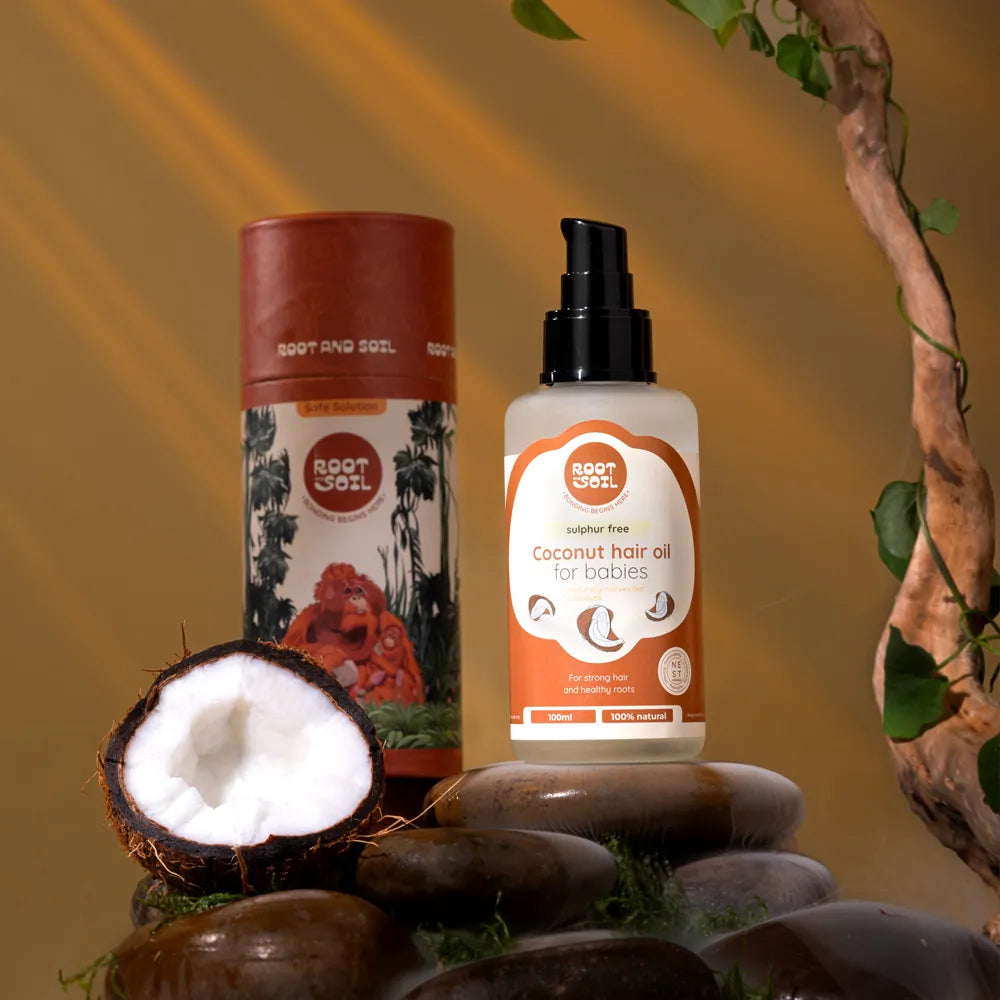
• Root and Soil Coconut Hair Oil for Babies is made using 85-days matured coconuts and is cold-pressed + sun-cured without using sulphur to retain natural nutrients for delicate baby scalps.
How it may help based on concern:
• For Dry Scalp
→ Helps replenish lost moisture and reduce dry, powdery flakes.
→ Supports a softer, hydrated scalp without heaviness.
• For Mild Cradle Cap
→ Helps soften thick, stuck flakes before brushing.
→ Makes crusts easier to loosen without pulling delicate hair.
• For Patchy Scalp due to dryness or friction
→ Helps soothe rough, dry patches and nurture the scalp barrier.
→ Especially helpful for areas affected by mattress friction.
• For Dandruff-like Flaking
→ Helps moisturize an irritated scalp and reduce visible flaking caused by dryness.
→ Works best when paired with a scalp cleansing routine.
How to Use
- Apply a few drops onto the scalp and massage for 5–10 minutes. Leave it on for 15–20 minutes before bath and wash using a mild baby cleanser.
When to Call the Pediatrician;
Schedule a visit with your doctor if you notice any of these warning signs: The scalp looks extremely red, swollen, or feels hot to the touch.
- The skin cracks, bleeds, or oozes fluid/pus (signs of a bacterial infection).
- The flaking or rash spreads extensively down onto the baby's face or body.
- The condition does not improve after two weeks of consistent home care.
FAQ:
Q1: How do I know if my baby has dry scalp or cradle cap? A: Dry scalp flakes are tiny, powdery, and white — like dust. Cradle cap looks thick, greasy, and yellowish, with scales firmly stuck to the scalp.
Q2: Does cradle cap itch or bother my baby? A: No. Cradle cap causes no itching or discomfort at all — your baby will be completely unbothered by it.
Q3: Can I pick off cradle cap scales? A: Never. Picking dry scales can cause bleeding and infection. Always soften them with oil first, then gently brush them away.
Q4: How often should I wash my baby's hair if they have dry scalp? A: Limit washing to 2–3 times a week with lukewarm water and a fragrance-free, hypoallergenic shampoo.
Q5: Is ringworm treatable at home? A: No. Ringworm requires a prescription antifungal medication and medicated shampoo from your doctor — home remedies won't work.
Q6: What causes dandruff in babies? A: Overproduction of scalp oil irritates the skin, speeding up skin cell shedding. It's a milder form of the same condition that causes cradle cap.
Q7: Can coconut oil help with cradle cap? A: Yes — a few drops massaged onto the scalp and left for 15–20 minutes softens thick crusts before gentle brushing. Always wash it off fully afterward.
Q8: Why does my baby have bald patches on their scalp? A: Patchy hair thinning is often caused by eczema, mattress friction, or ringworm. More supervised tummy time during the day can help reduce friction-related patches.
Q9: Should I leave oil on my baby's scalp overnight? A: No. Leaving oil on too long can clog pores and worsen scalp conditions. Apply for 15–20 minutes before bath, then wash it off thoroughly.
Q10: When should I call the pediatrician about my baby's scalp? A: See a doctor if the scalp looks red, swollen, or hot; if skin cracks or oozes; if the rash spreads to the face or body; or if there's no improvement after two weeks of home care.
5 Reasons Your Baby’s Skin Looks Dry & Dull
10 Baby Care Tips During Monsoon Season
Related Posts

10 Baby Care Tips During Monsoon Season

5 Reasons Your Baby’s Skin Looks Dry & Dull

A newborn Guide for the First Few Months

How to choose baby Skincare products in India ?

The Old Man of the Forest Has Something to Teach Us About Raising a Child

The Story of Root and Soil








2 Comments
54aonz
Nice product it’s working 👍