




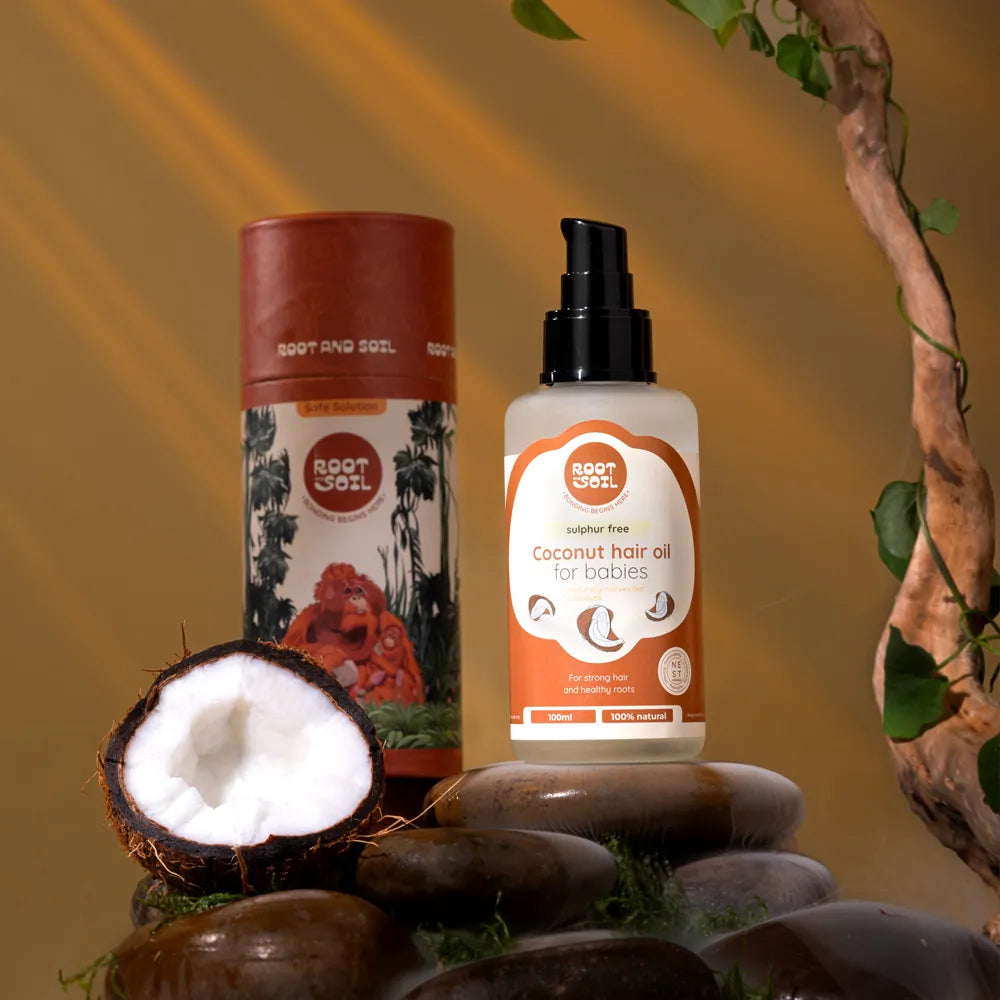


Baby Almond Lotions for Sensitive Skin
What truly helps—and what sensitive skin really needs
Redness that appears suddenly.
Rashes that come and go.
Skin that reacts even to products labelled “gentle.”
If this sounds familiar, you’re not alone. Sensitive skin is one of the most common concerns parents share—and also one of the most misunderstood.
Let’s slow this down and understand sensitive baby skin the way it actually behaves.
What Does Sensitive Skin Look Like in Babies?
From real parent experiences, sensitive baby skin usually shows up as:
-
Red patches
-
Frequent rashes
-
Burning or stinging sensation after applying lotion
-
Skin reacting to products meant to soothe it
This doesn’t mean the skin is “bad” or “weak.”
It means the skin is over-responsive.
Is Sensitive Skin a Condition or a Skin Type?
In our understanding, sensitive skin in babies is largely a skin type.
Some baby skin simply reacts faster and stronger than others—especially when exposed to the wrong ingredients. These reactions are not always visible immediately, which makes product choice even more confusing for parents.
Why Do Lotions Cause Reactions?
One pattern comes up again and again:
It’s not always the product category—it’s the ingredients.
Many parents report:
-
Burning sensations after applying lotion
-
Redness increasing instead of calming
-
“Gentle” or “baby-safe” lotions still triggering reactions
This usually happens when the skin encounters ingredients it doesn’t need.
Sensitive baby skin doesn’t ask for more—it asks for less.
Our Philosophy: Support the Skin, Then Step Back
A baby’s skin already knows how to function.
A lotion’s job is not to fix it aggressively—but to support it gently.
That’s why we believe:
-
Lotion should help the skin barrier
-
Not overload it
-
Not confuse it
-
Not overstimulate it
This is where Less is More truly matters.
Fewer ingredients.
Well-chosen textures.
Better absorption.
What “Less Is More” Means for Baby Lotions

For sensitive baby skin, less means:
-
Fewer ingredients
-
No unnecessary chemicals
-
No fragrance
-
Simple, familiar ingredients the skin understands
Sensitive skin reacts not because it’s fragile—but because it’s overwhelmed.
Ingredients We Trust for Sensitive Skin
From experience, coconut oil has shown consistent support for sensitive baby skin:
-
Helps soften skin
-
Supports moisture retention
-
Feels familiar to the skin
-
Doesn’t overstimulate
When used thoughtfully in lotion form, it supports the skin without taking over.
Fragrance-Free: Not a Trend, a Choice
We believe fragrance-free lotions are better for sensitive skin.
Not because fragrance is “bad,” but because sensitive baby skin doesn’t need extra stimulation. Even natural fragrances can trigger reactions.
This leads us to an important myth.
Myth: “Natural Means No Reactions”
This is one of the most common misconceptions.
The truth:
-
Natural ingredients can still cause reactions
-
Sensitive skin reacts to what it doesn’t recognise
-
Safety lies in simplicity, not labels
The goal is not chasing “natural” or “medicinal”—but choosing what the skin can quietly accept.
When and How to Use Lotion for Sensitive Skin
In our opinion, lotion works best:
-
After bath
-
On clean, slightly damp skin
-
Applied gently, without rubbing hard
We recommend:
-
Daily application
-
Using a mild, well-chosen lotion
-
Not layering multiple products
Consistency with the right product matters more than switching often.
Can Daily Lotion Make Sensitive Skin Worse?
Not if the lotion is right.
Sensitive skin doesn’t dislike daily care—it dislikes wrong care.
A mild lotion used daily supports the skin barrier and reduces flare-ups over time.
Safety Practices We Always Recommend

To parents navigating sensitive skin, we always suggest:
-
Patch test before first use
-
One product at a time
-
Observe for 24 hours
-
Avoid frequent product changes
Sensitive skin responds best to calm routines.
How to Use Lotion for Sensitive Baby Skin
A simple routine that supports the skin, not overwhelms it
-
Start after bath
Gently pat your baby’s skin dry, leaving it slightly damp. -
Apply a small amount
Warm the lotion between your palms and spread gently. -
Massage softly
Use slow, circular movements and let the lotion absorb naturally.
Less steps. Less stress. Just calm, consistent care
Final Thoughts: Choose Wisely, Not Widely
Sensitive baby skin doesn’t need a shelf full of products.
It needs:
-
Understanding first
-
Fewer products
-
The right lotion
-
Gentle, consistent care
When parents understand why the skin reacts, choosing becomes easier—and confidence replaces confusion.
Start with your baby’s skin.
Choose fewer products.
Choose the right lotion—not many.
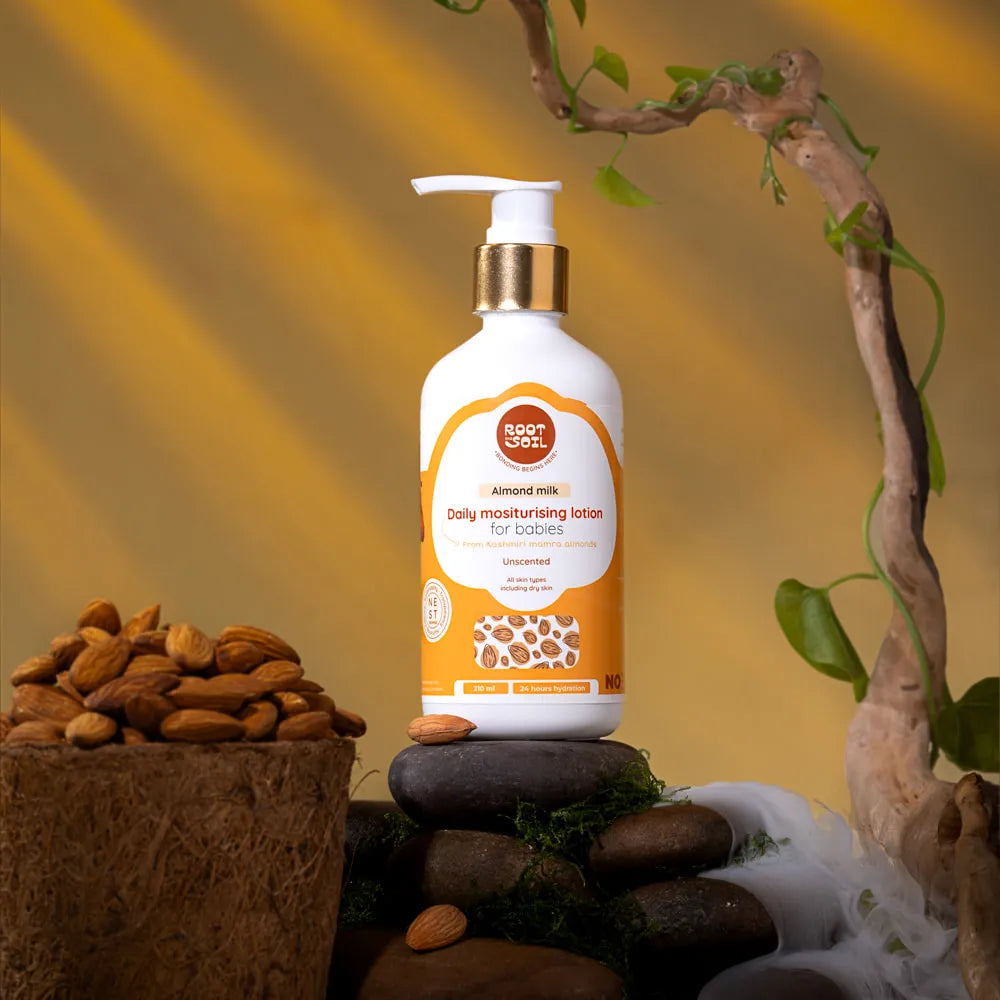
Root and Soil Almond Milk Lotion: What Makes It Different?
When it comes to sensitive baby skin, not all lotions behave the same.
At Root and Soil, we approach lotion the same way we approach baby skin—
with less interference, more understanding.
How Root and Soil Almond Milk Lotion is Made
We keep the process simple and intentional:
-
Almond milk is derived from real almonds, not synthetic extracts
-
Carefully blended with skin-supporting base ingredients
-
Formulated in small, controlled batches
-
No unnecessary additives, fillers, or shortcuts
The focus is not on adding more—but on retaining what matters.
Why Almond Milk?
Almond milk, in lotion form, offers a balanced way to support sensitive skin:
-
Feels light and breathable on the skin
-
Helps maintain softness without heaviness
-
Works well for daily application
-
Supports skin without overwhelming it
It’s not about “treating” the skin—
it’s about helping it stay comfortable.
Root and Soil vs Ordinary Baby Lotions
Here’s a simple way to understand the difference:
Root and Soil Almond Milk Lotion
-
Built on a less-is-more approach
-
Uses minimal, purposeful ingredients
-
No added fragrance
-
Designed for sensitive, reactive skin
-
Focus on absorption and skin compatibility
Ordinary Baby Lotions (Common Market Types)
-
Often contain multiple added ingredients
-
May include fragrance (even in “mild” products)
-
Can feel heavy or layered on the skin
-
Designed for general use, not always sensitive skin
-
May prioritise texture or feel over skin response
Why This Matters for Sensitive Skin
Sensitive skin doesn’t need stronger products.
It needs fewer interruptions.
When a lotion:
-
Absorbs easily
-
Doesn’t sit heavily on the skin
-
Doesn’t overstimulate
…the skin stays calmer, and reactions reduce over time.
Our Approach: Support, Don’t Overload
We don’t believe in chasing trends or adding complexity.
We believe:
-
Skin already knows how to function
-
Lotion should support, not interfere
-
Simplicity builds consistency
Because for sensitive baby skin,
what you leave out matters as much as what you put in.
A Note on Authenticity
At Root and Soil:
-
We focus on single-direction formulations
-
We avoid unnecessary layering of ingredients
-
We design products keeping real baby skin responses in mind
No exaggerated claims.
No confusion.
Just clear, thoughtful care.
FAQ: Baby Lotions for Sensitive Skin
1. Does my baby really need lotion every day?
Yes. Daily application helps support the skin barrier, especially after bathing, when moisture loss is higher.
2. Can I use lotion even if my baby has rashes?
A mild, well-chosen lotion can be used daily. For active rashes, use a rash cream only on affected areas.
3. My baby reacted to a “gentle” lotion. Why?
Sensitive skin often reacts to ingredients it doesn’t need. Labels don’t always reflect how baby skin responds.
4. Is fragrance-free always better for sensitive skin?
We believe so. Even natural fragrances can overstimulate sensitive skin and trigger reactions.
5. Can natural ingredients still cause reactions?
Yes. “Natural” doesn’t automatically mean reaction-free. Simplicity and familiarity matter more.
6. Should I apply more lotion if the skin looks very dry?
No. Use the right amount of the right lotion. Over-application or layering can overwhelm sensitive skin.
7. Should I try multiple lotions to see what works?
No. Use one product at a time, patch test, and observe for at least 24 hours.
8. When should I stop using a lotion?
If you notice increased redness, burning, or discomfort, pause use and reassess based on your baby’s skin type.
Related Posts

10 Baby Care Tips During Monsoon Season

Difference Between Cradle Cap, Dry Scalp, Patchy Scalp, and Dandruff in Babies.

5 Reasons Your Baby’s Skin Looks Dry & Dull

A newborn Guide for the First Few Months

How to choose baby Skincare products in India ?

The Old Man of the Forest Has Something to Teach Us About Raising a Child

The Story of Root and Soil








4 Comments
3wrmp8
a0jfe3
94hou0
bymyvi