





Why Your Baby Smells Different Every Week
1. A Newborn’s Skin Is Not “Finished” at Birth
At birth, a baby’s skin is still adapting to life outside the womb.
Inside, the environment was:
-
Sterile
-
Temperature-controlled
-
Constantly moist
-
Protected by vernix
Once born, skin must suddenly:
-
Regulate temperature
-
Retain moisture
-
Host beneficial bacteria
-
Defend against the environment
This transition continues for weeks — even months.
As the skin barrier matures and the microbiome establishes itself, natural skin scent changes. This is expected, healthy, and temporary.
2. The Role of the Skin Microbiome (Why Scent Changes Happen)
Your baby’s skin is home to trillions of microorganisms — bacteria that protect, educate, and balance the immune system.
In newborns:
-
The microbiome is immature and unstable
-
Different areas of the body colonize at different rates
-
Folds (neck, armpits, behind ears) develop scent faster
Scientific studies show that early skin microbiota composition shifts rapidly in the first weeks of life — influenced by:
-
Birth method (vaginal vs C-section)
-
Feeding (breastmilk vs formula)
-
Bathing frequency
-
Products used on skin
So when your baby smells “different,” it often means:
beneficial bacteria are finding their balance.
3. Vernix Loss: The First Big Scent Shift
Vernix caseosa — the creamy white coating at birth — is rich in:
-
Lipids
-
Antimicrobial peptides
-
Natural scent markers
As vernix absorbs and disappears over the first few days:
-
Skin scent changes
-
Dryness or peeling may appear
-
Natural oils adjust
This phase alone can make babies smell noticeably different from week one to week two.
4. Sweat Glands & Hormonal Influence
Babies are born with immature sweat glands, but they don’t stay dormant forever.
As weeks pass:
-
Apocrine glands (in folds) activate lightly
-
Mild sweat mixes with skin bacteria
-
Warm climates accelerate this process
This can create a slightly tangy or musky scent, especially:
-
Behind ears
-
Neck folds
-
Thigh creases
This is not dirt — it’s physiology.
Over-washing at this stage can actually worsen scent by disrupting the microbiome.
5. Why Fragrances Make Things Worse
Many parents respond to changing baby smell by:
-
Bathing more often
-
Using scented soaps or lotions
-
Applying baby powders
Unfortunately, fragrance:
-
Masks natural scent instead of addressing balance
-
Disrupts skin bacteria
-
Increases irritation risk
-
Can worsen eczema and rashes
Pediatric dermatology guidelines consistently recommend fragrance-free care, especially in the first year of life.
Your baby recognizes you by scent — not artificial perfumes.
6. What’s Normal — and What’s Not
Normal:
-
Mild sour or milky scent in folds
-
Changing smell week to week
-
Temporary scalp odor
-
Slight sweat smell in warm weather
Not normal (consult a pediatrician):
-
Strong foul odor
-
Oozing, redness, or crusting
-
Signs of fungal infection
-
Persistent rash with smell
Most scent changes resolve on their own with gentle care.
7. The Root and Soil Way: Let Skin Breathe
At Root and Soil, we treat baby skin as a living system — not something to overpower.
That means:
-
No artificial fragrances
-
No deodorising agents
-
No harsh cleansing
-
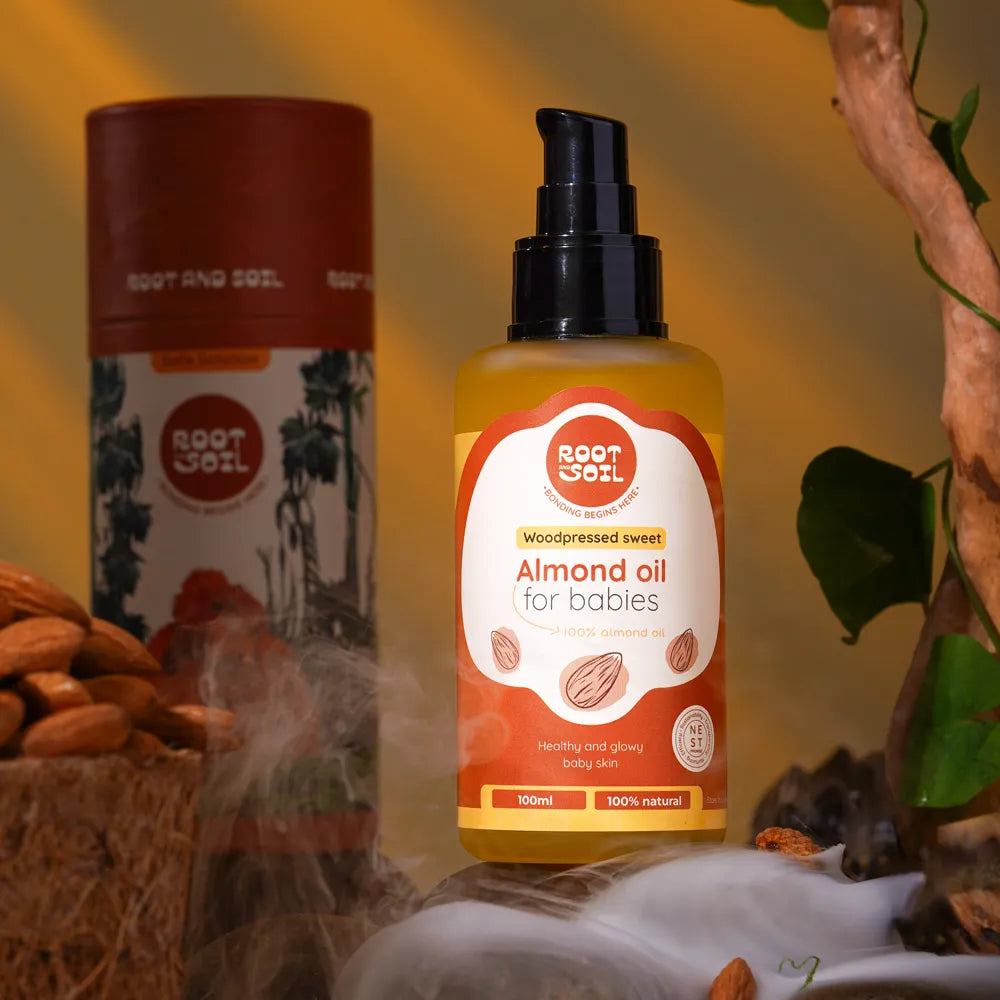
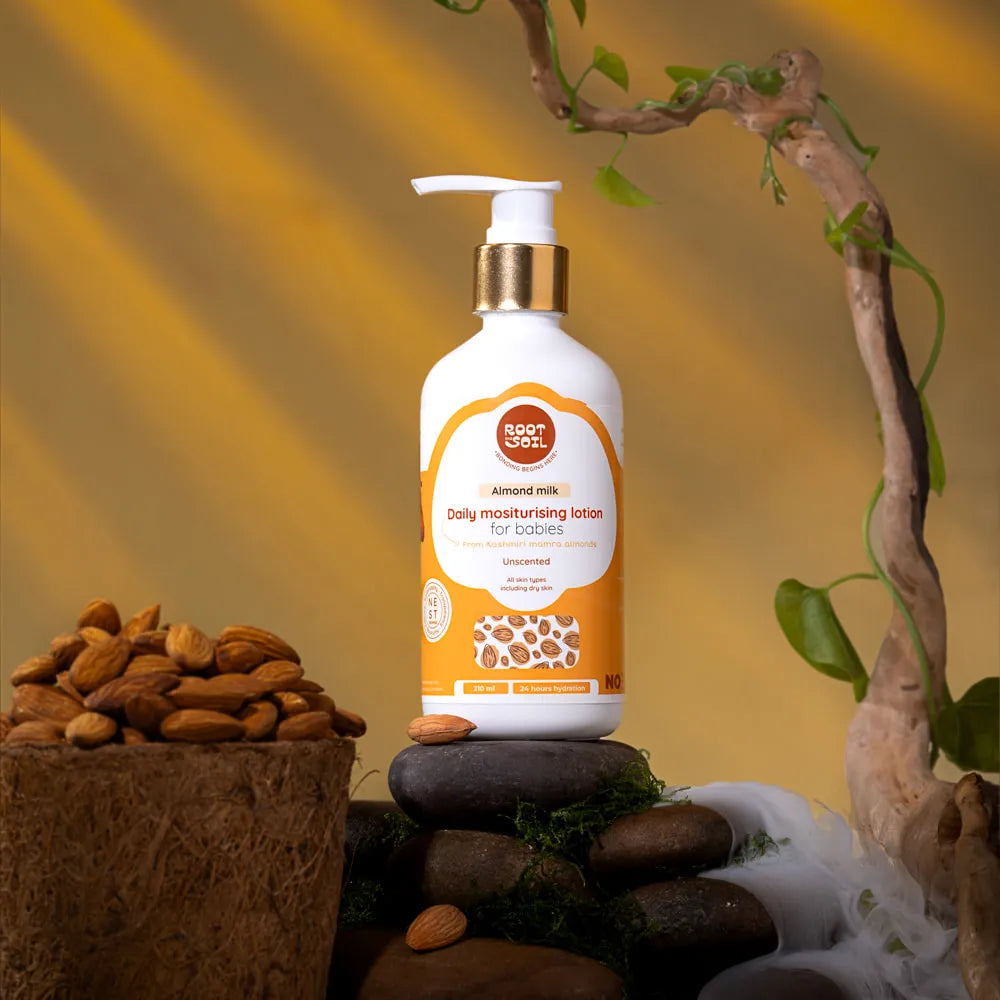
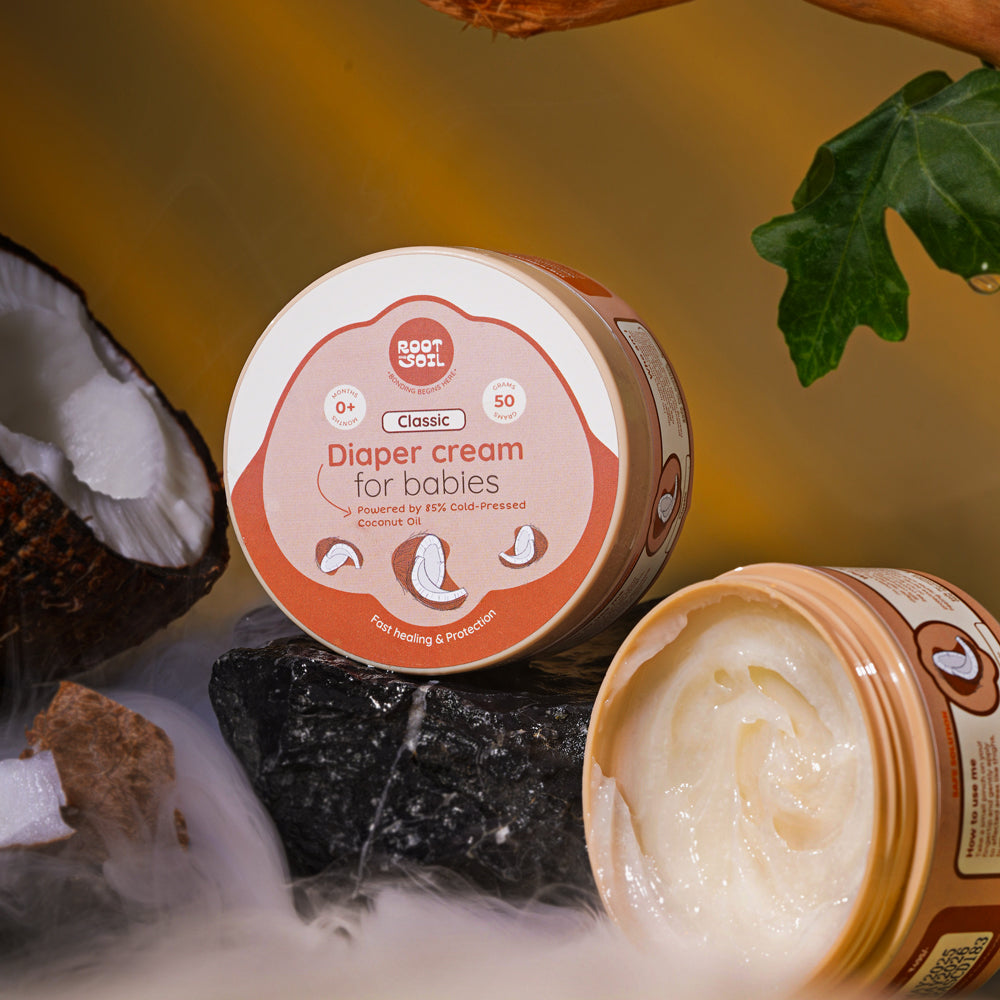
Cold-pressed oils that support barrier health
-
Minimal routines that allow the microbiome to stabilise
When skin is nourished, not stripped, scent naturally balances.
Massage with warm, pure oils doesn’t just moisturize —
it supports circulation, microbial harmony, and comfort.
8. A Gentle Care Routine That Respects Natural Scent
-
Bathe 2–3 times a week
-
Clean folds gently with water, pat dry
-
Use fragrance-free oils or emollients
-
Avoid powders and perfumes
-
Dress baby in breathable cotton
Less intervention = more balance.
That Scent Is a Season
Your baby’s scent will change again.
And again.
Each phase marks growth — immune education, skin strength, sensory awareness.
You don’t need to erase it.
You just need to support it.
Because one day, without warning, that newborn smell will disappear —
and you’ll miss it more than you ever imagined.
FAQs:
1. Why does my baby smell sour sometimes?
Skin bacteria interacting with sweat in folds can cause mild sourness — it’s normal.
2. Should I bathe my baby daily to control smell?
No. Over-bathing disrupts skin balance and can worsen odor and dryness.
3. Is baby powder safe for odor control?
Not recommended — powders can irritate skin and lungs.
4. Does breastfed baby skin smell different?
Often yes — breastmilk influences skin microbiome and scent.
5. Can oils cause smell?
Pure, cold-pressed oils support balance. Artificial fragrances cause imbalance.
6. When does baby skin scent stabilize?
Usually between 3–6 months as skin barrier matures.
7. Is scalp smell normal?
Yes — especially during cradle cap or oil balance shifts.
8. Should I use scented wipes?
Avoid. Fragrance-free wipes are safer for sensitive skin.
9. Does heat affect baby smell?
Yes. Warm climates increase sweat and microbial activity.
10. Can Root and Soil products help?
Yes — our scent-free, skin-recognisable oils nourish without masking natural scent.
Why Your Baby’s Skin Reacts to “Baby Products”
Why Baby massage Oil Helps Dry Skin ?
Related Posts

10 Baby Care Tips During Monsoon Season

Difference Between Cradle Cap, Dry Scalp, Patchy Scalp, and Dandruff in Babies.

5 Reasons Your Baby’s Skin Looks Dry & Dull

A newborn Guide for the First Few Months

How to choose baby Skincare products in India ?

The Old Man of the Forest Has Something to Teach Us About Raising a Child

The Story of Root and Soil