






How to choose Baby creams?
A simple, experience-led guide for new parents
Walk into any baby store and you’ll see shelves full of creams—daily creams, rash creams, healing creams, soothing creams. It’s no surprise many parents feel overwhelmed and unsure where to start.
One of the most common things we hear is:
“Do babies really need creams? Aren’t they just for adults?”
The truth is—baby creams aren’t about fixing skin. They’re about supporting it.
And babies don’t need many. They need the right ones.
First, Let’s Understand Baby Skin
Baby skin is:
-
Delicate
-
Still developing
-
Constantly exposed to diapers, weather changes, bathing, and friction
It produces very little natural oil on its own, which means it needs more external support—especially in the early months.
So while baby skin is capable, it still needs consistent protection—not heavy treatment.
The Biggest Misconception About Baby Creams
Many parents believe:
-
Creams are only for adults
-
Baby skin will “adjust on its own”
-
Using creams will make skin dependent
In reality, the right cream helps baby skin stay balanced—especially when dryness, rashes, or patches appear.
The key is choosing fewer, well-selected creams—not many.
What Skin Concerns Do We Commonly See in Babies?
From real parent experiences, common concerns include:
-
Dry skin
-
Diaper rash
-
Mild eczema
-
Red patches
-
Flaky or rough areas
-
White or dry patches
These are usually linked to:
-
Weather and climate changes
-
Frequent bathing
-
Diaper friction
-
Sensitive skin type
The Baby Creams Most Babies Actually Need
1. Daily Moisturising Cream
This is for everyday skin support. A good daily cream helps:
-
Prevent dryness
-
Maintain skin softness
-
Support the skin barrier
Look for:
-
Fewer ingredients
-
Unknown and complicated names
-
No strong fragrance
-
Proper certifications
Best used after a bath, when the skin is clean and slightly damp.
2. Skin Repair Cream (Multi-Purpose Support)
A well-formulated repair cream can help with:
-
Mild eczema
-
Mild allergies
-
Dry or white patches
-
Red, irritated skin
It works by:
-
Calming irritation
-
Supporting healing
-
Protecting the affected area
Use only where needed—not all over the body.
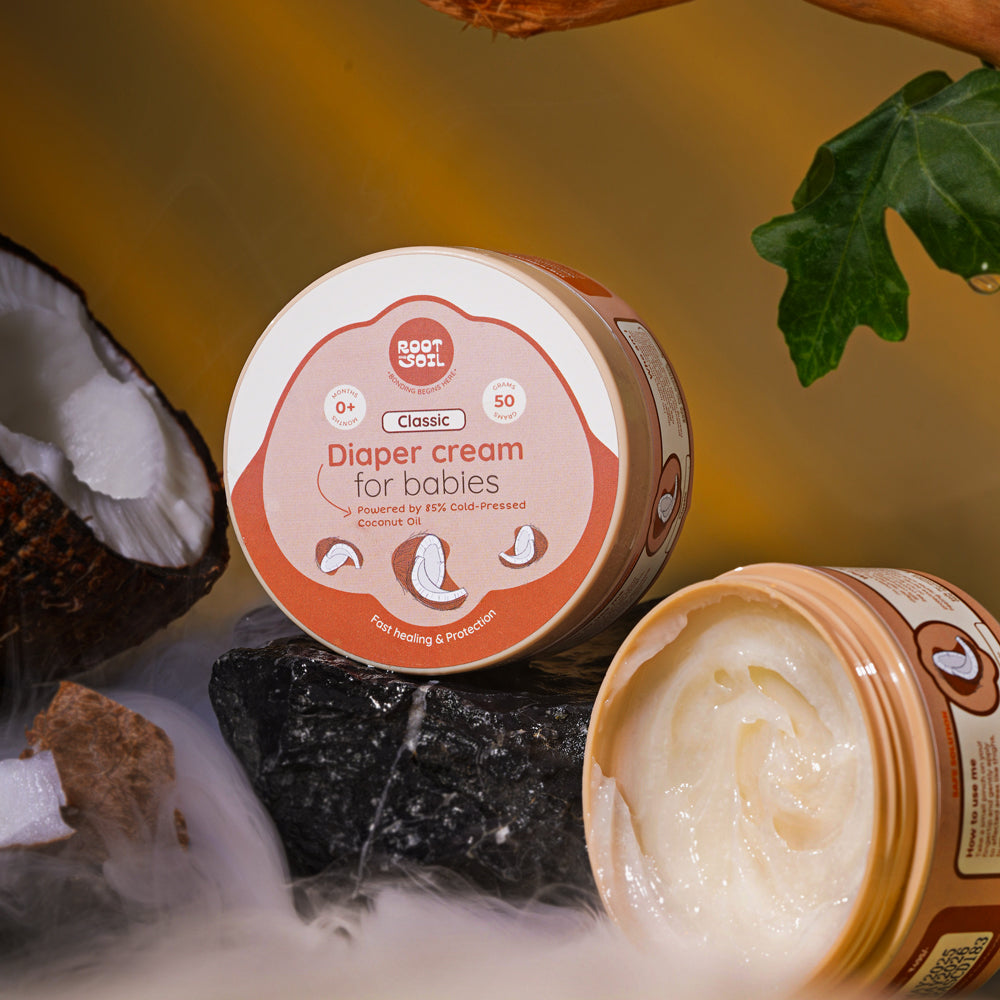
3. Diaper Rash Cream:
Diaper Rash Cream (Protection Where It Matters Most)
The diaper area goes through the most stress in a baby’s daily routine—constant moisture, friction, and exposure to urine and stool.
That’s why diaper rash creams are not just for treating rashes—they’re for preventing them in the first place.
A good diaper rash cream helps:
-
Protect the skin from excess moisture
-
Reduce redness and irritation
-
Prevent diaper rash before it starts
-
Soothe already inflamed skin
It works by:
-
Creating a protective barrier on the skin
-
Reducing friction caused by diapers
-
Keeping the area dry and calm
When to use:
-
At every diaper change (for prevention)
-
Especially during nighttime (longer diaper hours)
-
When you notice redness or irritation starting
What to look for:
-
skin-safe ingredients
-
No strong fragrance
-
Non-irritating and suitable for frequent use
-
Simple formulations that focus on protection, not harsh treatment
Important tip:
Always apply on clean, completely dry skin for best results.
Ingredients Matter More Than Labels
For baby creams, ingredient count matters more than marketing claims.
A good product should:
-
Safe on skin
-
Support moisture retention
-
Feel familiar and comforting
We recommend being cautious with:
-
Strong fragrances
-
Harsh chemicals
-
Mineral oil
-
Sulphates
-
Parabens
Not because every ingredient is “bad,” but because sensitive baby skin doesn’t need them.
A Simple Cream Routine (That Actually Works)
You don’t need a long routine:
After Bath:
-
Pat skin dry gently (don’t rub)
-
Apply daily moisturising cream all over
-
Use circular (rotational) massage
-
Apply repair cream only where needed
Consistency matters more than quantity.
Quick Massage Tip
Massage doesn’t need pressure:
-
Use soft, circular movements
-
Go slow
-
Let the cream absorb naturally
This helps with:
-
Better absorption
-
Calmer skin
-
A soothing daily bonding ritual
Safety First: What We Always Recommend
-
Always do a patch test before using a new cream
-
Use one product at a time
-
Observe how your baby’s skin responds
-
If a reaction occurs, stop using the product.
Every baby’s skin is different.
Where Root and Soil Fits In
At Root and Soil, we believe baby skin doesn’t need more products—it needs more understanding.
How Our Baby Creams Are Made
Our formulations are built around:
-
Minimal ingredients (only what skin truly needs)
-
Time-tested bases like Organic products, herbs and plant oils
-
Slow, stability-focused formulation
-
Dermatologically tested, baby-safe compositions
We don’t design products to “look attractive.”
We design them to work quietly and consistently with the skin.
What Makes Root and Soil Different
Most baby creams focus on:
-
Fragrance-led experience
-
Heavy textures
-
Long ingredient lists
-
Instant “feel-good” finish
Our approach is different:
-
Less is More
Fewer ingredients = fewer chances of irritation -
Skin-First, Not Trend-First
We follow how baby skin behaves—not trends -
Familiar to the Skin
Natural products -based care aligns with trusted Indian practices -
Multi-Functional Thinking
2–3 essentials instead of many products -
No Unnecessary Additions
No strong fragrances or fillers—only what supports skin
A Common Myth to Clear
Myth: “Natural means no reactions.”
Truth: Even natural ingredients can cause reactions if the skin isn’t ready.
The goal is not “natural vs chemical”—
The goal is what your baby’s skin accepts calmly.
FAQ: Common Parent Questions
Q1. Do babies really need creams daily?
Yes, daily moisturising supports the skin barrier—especially after bathing.
Q2. Can I use rash cream every day?
No, it’s best used only on areas that need extra care, unless advised otherwise.
Q3. What if my baby has eczema?
Mild eczema can be supported with consistent care. If it persists, consult a Paediatrician.
Q4. Is more cream better?
No. The right amount of the right cream is better than layering multiple products.
Q5. When is the best time to apply baby cream?
Right after a bath, when the skin is slightly damp, as it helps lock in moisture.
Q6. Can I use adult creams on my baby?
It’s not recommended. Baby skin is more delicate and needs gentler, simpler formulations.
Q7. How do I know if a cream suits my baby?
If the skin stays soft, calm, and irritation-free, it’s working well. Always do a patch test first.
Q8. Should I apply cream on my baby’s face as well?
Yes, but use a gentle, suitable cream and apply a small amount.
Q9. What causes dryness in babies?
Common reasons include frequent bathing, weather changes, and naturally low oil production in baby skin.
Q10. Can I switch between different creams?
It’s better to stay consistent with products that suit your baby, unless there’s a specific need to change.
Complete Baby Bath Essentials Checklist for New Parents
Baby Almond Lotions for Sensitive Skin
Related Posts

10 Baby Care Tips During Monsoon Season

Difference Between Cradle Cap, Dry Scalp, Patchy Scalp, and Dandruff in Babies.

5 Reasons Your Baby’s Skin Looks Dry & Dull

A newborn Guide for the First Few Months

How to choose baby Skincare products in India ?

The Old Man of the Forest Has Something to Teach Us About Raising a Child

The Story of Root and Soil








2 Comments
o1svea
2tiyj7