






Complete Baby Bath Essentials Checklist for New Parents
A story every new parent quietly lives through…
It usually starts with a small setup.
A tiny towel folded neatly.
A small tub filled with water, tested and ready.
A baby in your arms… who still feels unbelievably new.
And then comes the thought—
“Do I have everything I need?”
Because somehow, something so simple…
starts feeling like it needs a full system.
The Moment It Starts Getting Complicated
You search once.
And suddenly, there are lists everywhere.
Different oils.
Different washes.
Different steps.
Each one adding something new.
And before you realise it,
bath time doesn’t feel like a small routine anymore.
It feels like something you could get wrong.
The Shift Most Parents Go Through
But then, slowly, something changes.
Not because of another product.
But because you start observing your baby.
You notice what actually works.
What feels right.
What your baby responds to.
And that’s when the realisation hits:
Maybe you don’t need everything.
Maybe you just need the right few things.
What Actually Belongs in Your Baby’s Bath Routine
Not a long list.
Not a complicated one.
Just what truly matters — and why.
1. Before the Bath — Oil That Prepares, Not Overwhelms
Before water touches the skin, there’s a small window.
A few minutes where your baby begins to settle.
A light massage here does more than you expect—
it prepares the skin before water exposure
and makes the transition into bath time smoother.
What matters:
-
Minimal ingredients
-
Cold-pressed
-
Made for newborn skin
What doesn’t help:
-
Mineral oils
-
Artificial fragrance
-
Complex blends
2. During the Bath — A Cleanser That Doesn’t Do Too Much
Here’s something most parents realise later:
Babies don’t need heavy lather to be clean.
In fact, too much foam can strip away what the skin is trying to hold on to.
What works better:
-
Low-foam or oil-based cleansers
-
Simple formulations
-
One product for both hair and body
What to avoid:
-
Sulphates
-
Alcohol
-
Over-marketed “tear-free” claims
3. After the Bath — The Step That Changes Everything
This is the part many people underestimate.
Bathing increases water loss from the skin.
So what you do in the next few minutes matters more than the bath itself.
Pat dry.
No rubbing.
And within 2–3 minutes—
apply a moisturiser that supports the skin barrier.
What to look for:
-
Minimal ingredients
-
Barrier-supporting formulation
-
Safe for daily use
4. The Diaper Area — Where Protection Matters Daily
This area goes through constant moisture and friction.
And waiting for a rash to appear isn’t the best approach.
A simple protective layer, used consistently, helps avoid that cycle.
What works:
-
Oil-rich, water-resistant balms
-
Barrier-forming formulations
What to avoid:
-
Strong fragrance
-
Unnecessary medicated combinations (unless prescribed)
5. The Things Around the Routine (That Matter More Than You Think)
Sometimes, it’s not just the products.
It’s the small things around them.
✔ Soft towel
Because damp skin doesn’t respond well to rough textures
✔ Lukewarm water
Because temperature affects how the skin feels after
✔ A safe bathing surface
Because stability keeps the experience calm
✔ Clean, breathable clothes
Because what touches the skin after matters too
✔ Time without rush
Because babies sense pace more than process
What You Don’t Actually Need
This is where things get clearer.
You don’t need:
-
Multiple cleansers
-
Separate products for every small step
-
A shelf full of options
Because more products don’t mean better care.
They often just mean more confusion.
The Routine That Starts Working Over Time
Once things simplify, your routine begins to flow.
Not forced. Not complicated.
Just consistent.
Massage → Bath → Moisturise → Protect
And over time, your baby begins to recognise it.
Bath time becomes less about “cleaning”…
and more about settling into a rhythm.
When Skin Concerns Show Up
Every baby is different.
But the solution usually isn’t adding more.
It’s adjusting what’s already there.
-
Dryness → reduce bath frequency, keep it simple
-
Sensitivity → avoid switching products often
-
Flaky scalp → stay consistent instead of over-treating
-
Diaper irritation → focus on protection, not reaction
In Indian Homes, This Matters Even More
With warmer weather and changing seasons:
Water tends to be hotter
Baths tend to be longer
And unknowingly,
this increases moisture loss.
What works better:
-
Lukewarm water
-
Shorter baths
-
Consistent post-bath care
The Only Checklist You Really Need

✔ One pre-bath oil
✔ One low-foam cleanser
✔ One moisturiser
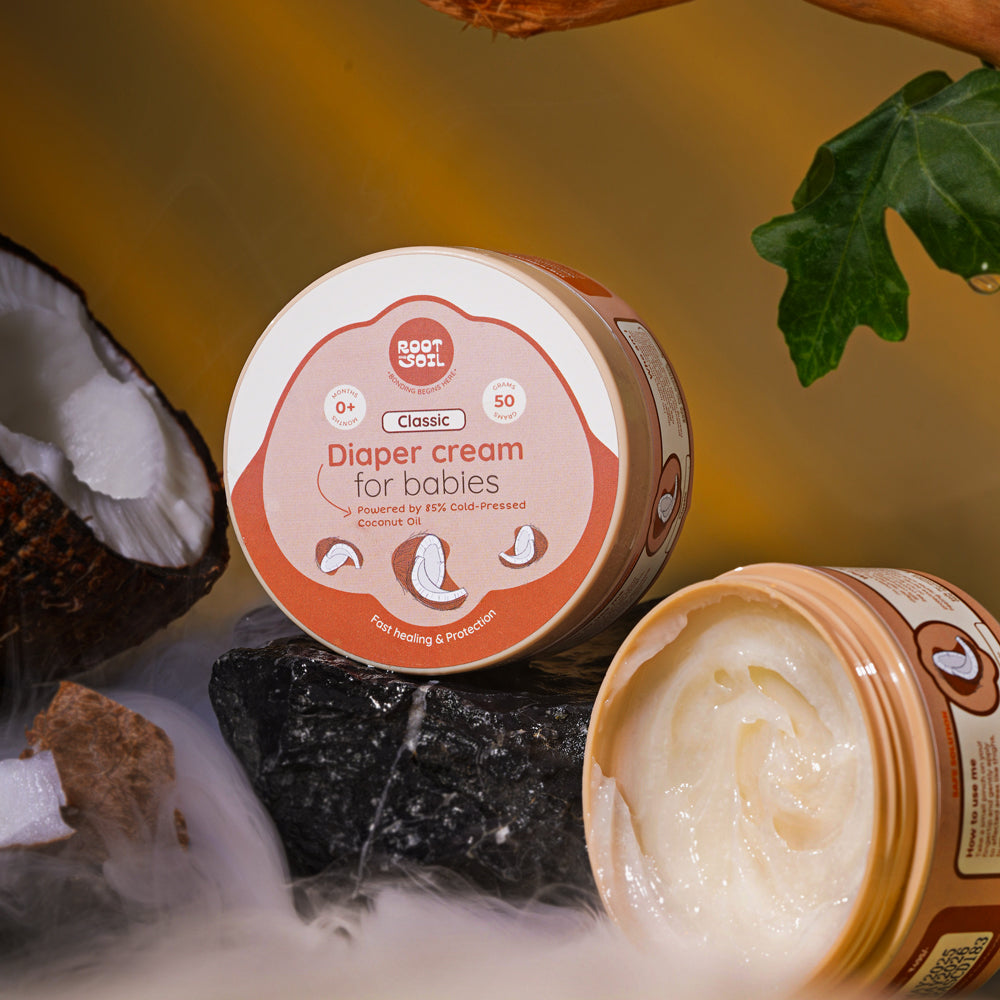
✔ One diaper rash cream
✔ A soft towel
✔ Lukewarm water
✔ A safe surface
✔ Clean clothes
✔ And time without rush
That’s it.
Where Root and Soil Fits In
And somewhere along this journey…
most parents realise something important:
It’s not that there aren’t enough products.
It’s that there are too many — without clarity.
That’s exactly why we built our baby bath care essentials the way we did.
Not to add more steps.
But to make the few steps you follow… work better.
Why Our Essentials Are Made This Way
Because your baby’s skin is still developing,
what goes on matters just as much as what stays out.
That’s why:
-
We use minimal, purposeful ingredients
-
We avoid unnecessary fillers, synthetic fragrance, and harsh additives
-
We focus on formulations that support the skin — not overwhelm it
-
And every product is safe to use from day one
The Essentials That Fit Into Your Routine

Not separate products for every small step.
Just a few essentials that align with how baby care should actually work.
Pre-Bath Massage
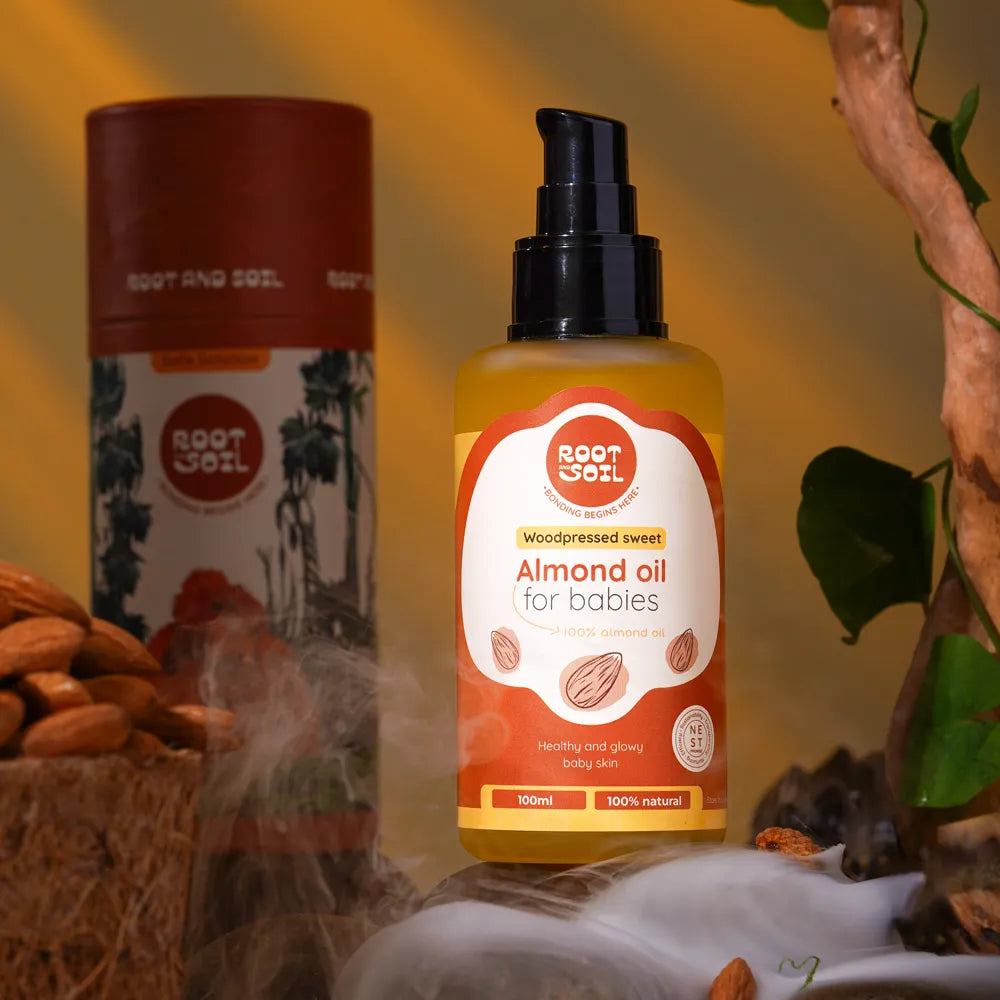
Wood-Pressed Sweet Almond Oil
-
Made from high-quality almonds using slow extraction
-
Rich in naturally occurring nutrients like Vitamin E and Biotin
-
Supports skin comfort and helps improve overall texture with regular use
-
Light, non-sticky, easy to absorb
During Bath
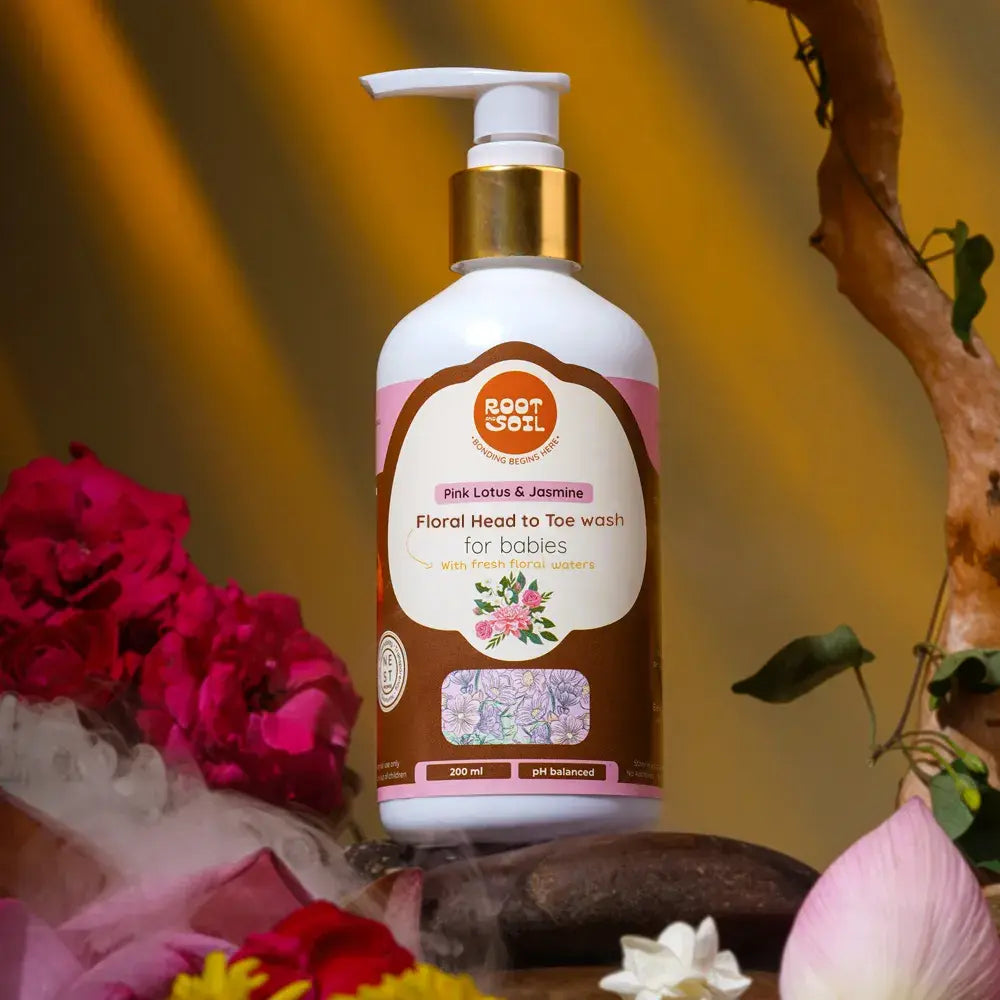
Baby Bathing Bar (Tender coconut bathing bar)
-
Made using tender coconut.
-
no added preservatives
-
Cleans without disrupting the skin’s natural balance
-
Designed for both hair and body — no need for multiple products
After Bath
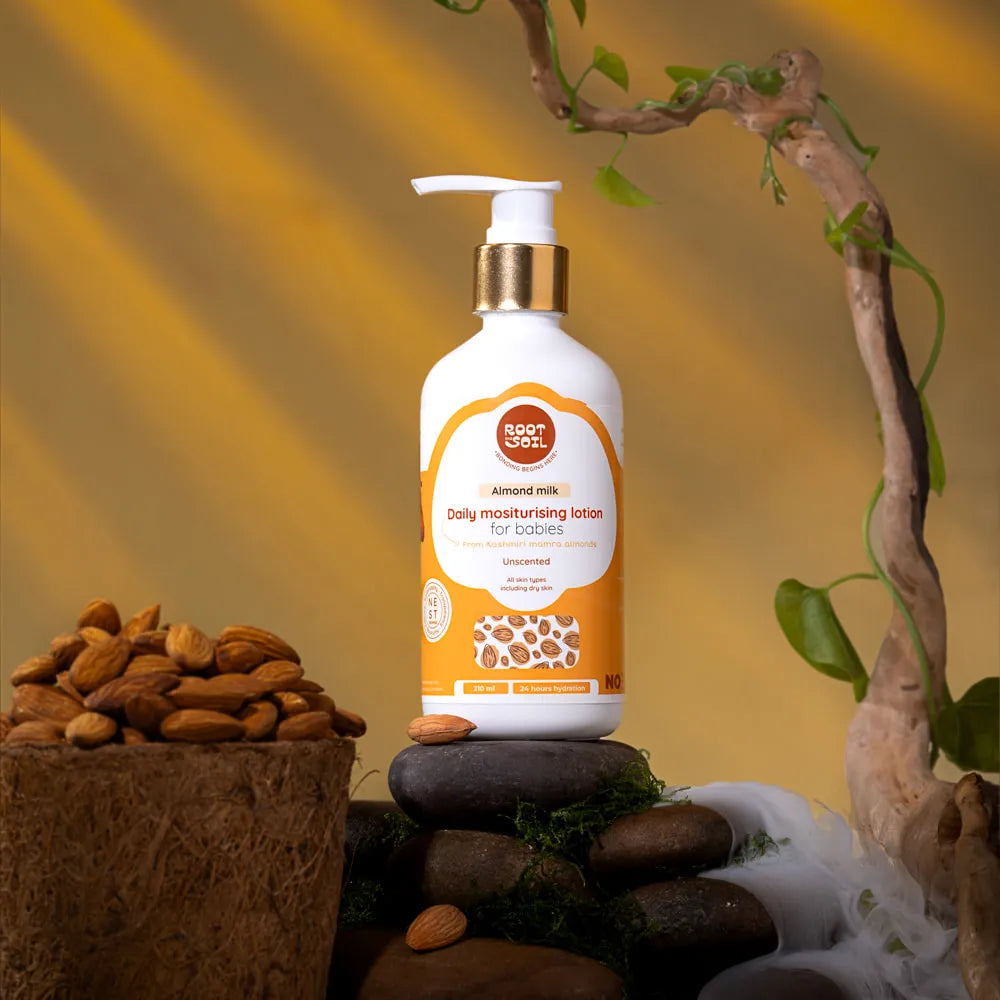
Almond Milk Lotion
-
Combines almond milk and sweet almond oil
-
Helps reduce post-bath dryness when applied on slightly damp skin
-
Lightweight, absorbs quickly without leaving residue
-
Works well for daily use
For Scalp Care
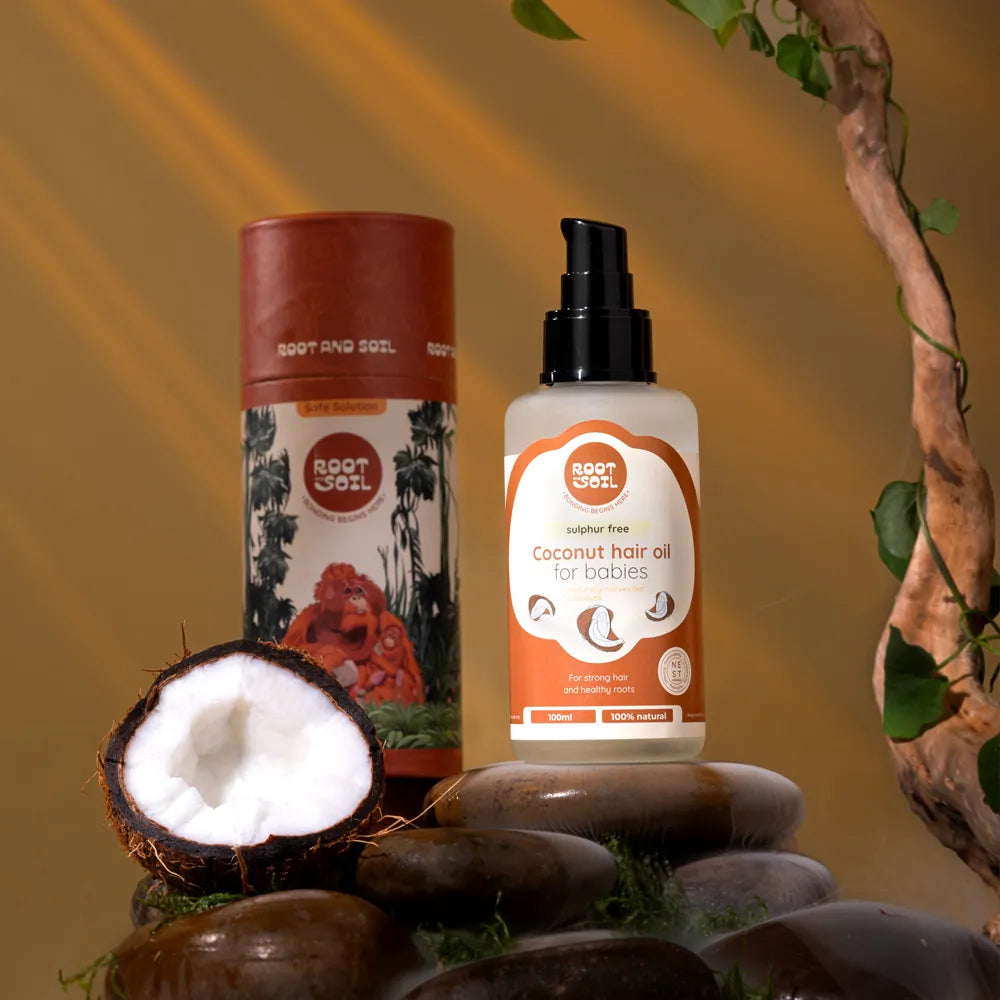
Coconut Hair Oil for Babies
-
Relieves cradle cap
-
Supports scalp health and helps manage flakiness
-
Naturally rich in lauric acid
-
Suitable for regular use without buildup
What You Won’t Find Here
Because we’ve consciously left them out:
-
No sulphates
-
No synthetic fragrance
-
No mineral oils
-
No unnecessary complexity
Built for Real Routines, Not Perfect Ones
We don’t believe in 10-step routines.
We believe in:
-
Fewer products
-
Used consistently
-
In a way that feels calm and manageable
Because that’s what actually works — not just for the skin,
but for you as a parent.
If You Remember Just One Thing
You’re not missing anything.
You don’t need more products.
You don’t need a perfect routine.
You just need a few things—
used with consistency and clarity.
And one day, without even noticing,
bath time becomes simple again.
Not something you question.
Just something that works.
Frequently Asked Questions
1. How often should I bathe my baby in the first 6 months?
For most babies, bathing two to three times a week is enough. Daily bathing can dry out a baby’s developing skin unless medically advised.
2. Is oil massage necessary before every bath?
Oil massage is not mandatory, but it is highly beneficial. It helps prepare the skin, supports relaxation, and can reduce dryness when done gently and consistently.
3. Can I use soap every time I bathe my baby?
No. Cleanser should be used sparingly and only when needed. Plain lukewarm water is often sufficient for light cleaning between baths.
4. Why should baby cleansers be low-foam or oil-based?
High foam usually means stronger cleansing agents that strip natural oils. Low-foam or oil-based cleansers clean gently while protecting the skin barrier.
5. Is it okay to use the same product for hair and body?
Yes. A mild, well-formulated cleanser can safely be used for both hair and body, especially in babies under six months.
6. My baby has dry patches. Should I stop bathing altogether?
No. Instead of stopping baths, reduce frequency, keep bath time short, and moisturise immediately after bathing to support skin hydration.
7. Are “tear-free” baby products safer?
Not necessarily. “Tear-free” often means numbing agents are added. A gentle, minimal formulation is more important than the label.
8. Is organic always better for baby skin?
Organic ingredients alone do not guarantee safety or effectiveness. How a product is formulated and tested matters more than the label.
9. Can frequent bathing cause diaper rash?
Yes. Over-cleansing can weaken the skin barrier and increase irritation. Using a protective diaper balm regularly helps prevent rashes.
10. How do I know if I’m using too many products?
If your baby’s skin feels dry, irritated, or unpredictable, simplifying the routine is often the best first step. One product at a time allows the skin to respond naturally.
Related Posts

5 Reasons Your Baby’s Skin Looks Dry & Dull

A newborn Guide for the First Few Months

How to choose baby Skincare products in India ?

The Old Man of the Forest Has Something to Teach Us About Raising a Child

The Story of Root and Soil

India’s No 1 Sweet Almond Oil for Babies

Baby Almond Lotions for Sensitive Skin








3 Comments
I was trying to find out if I could increase the RAM on my laptop. My
research eventually led me to https://znayka.com.ua.
I couldn’t find clear technical explanations on most websites. Many sources were confusing.
On this site I found useful technical guidance, along with clear diagrams that made everything much easier to understand.
I suggest checking this site if you want reliable information about laptops and hardware upgrades.
q1cl40
xd5gwd